

Storm restoration CRM for storm and insurance restoration. Insurance jobs, from claim to depreciation.
A pipeline built around the claim: inspection, claim filed, adjuster meeting, scope, supplements, production and the depreciation check.
Watch it work
Supplements and change orders, signed.
Add the supplement or the extra work to the job, send it, and the homeowner signs on their phone. The job keeps the whole paper trail.
Your pipeline comes set up.
Pick Storm restoration as your type of business when you sign up and LoonStack sets these stages, the follow-ups and the fields for you. Change any of it later.
- New lead
- Contacted
- Inspection scheduled
- Inspected
- Claim filed
- Adjuster meeting
- Scope received
- Estimate sent
- Supplement sent
- Supplement approved
- Signed
- Materials ordered
- In production
- Final walkthrough
- Depreciation released
- Paid
- Lost
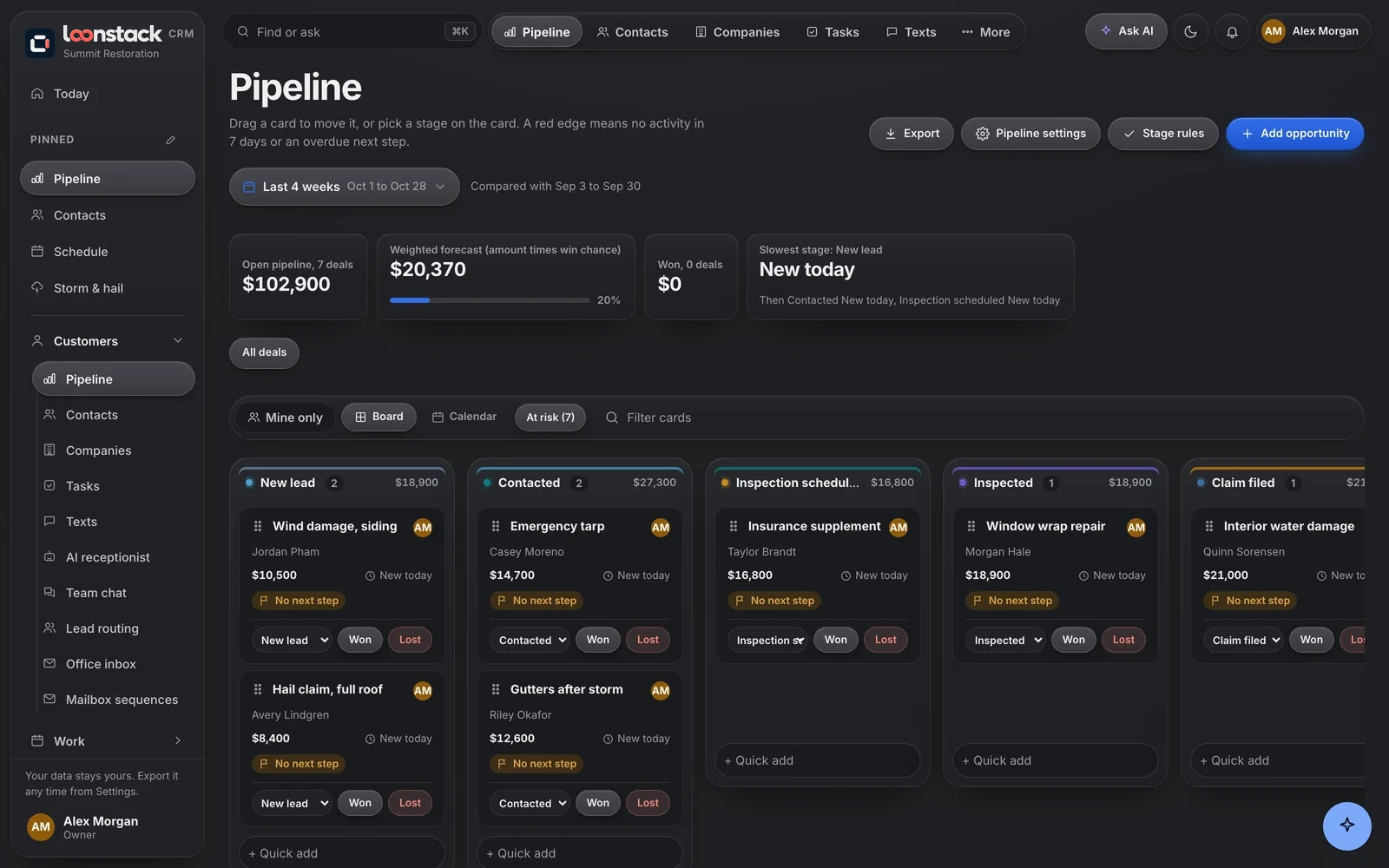
A screenshot of the real app with a sample business, Summit Restoration (sample).
Your workflows.
Each card opens a recording of the real app doing that job.
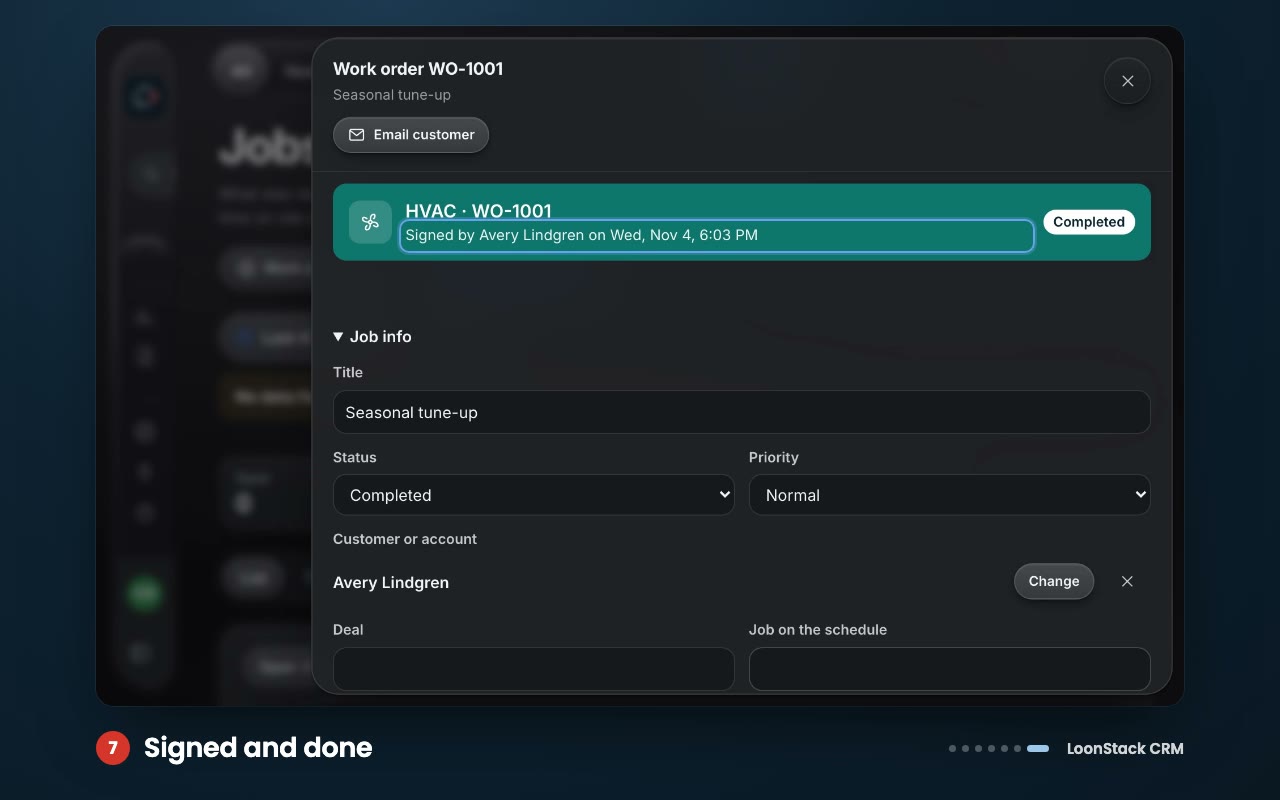 Work orders and change ordersChange orders and supplements the homeowner signs.Watch it work
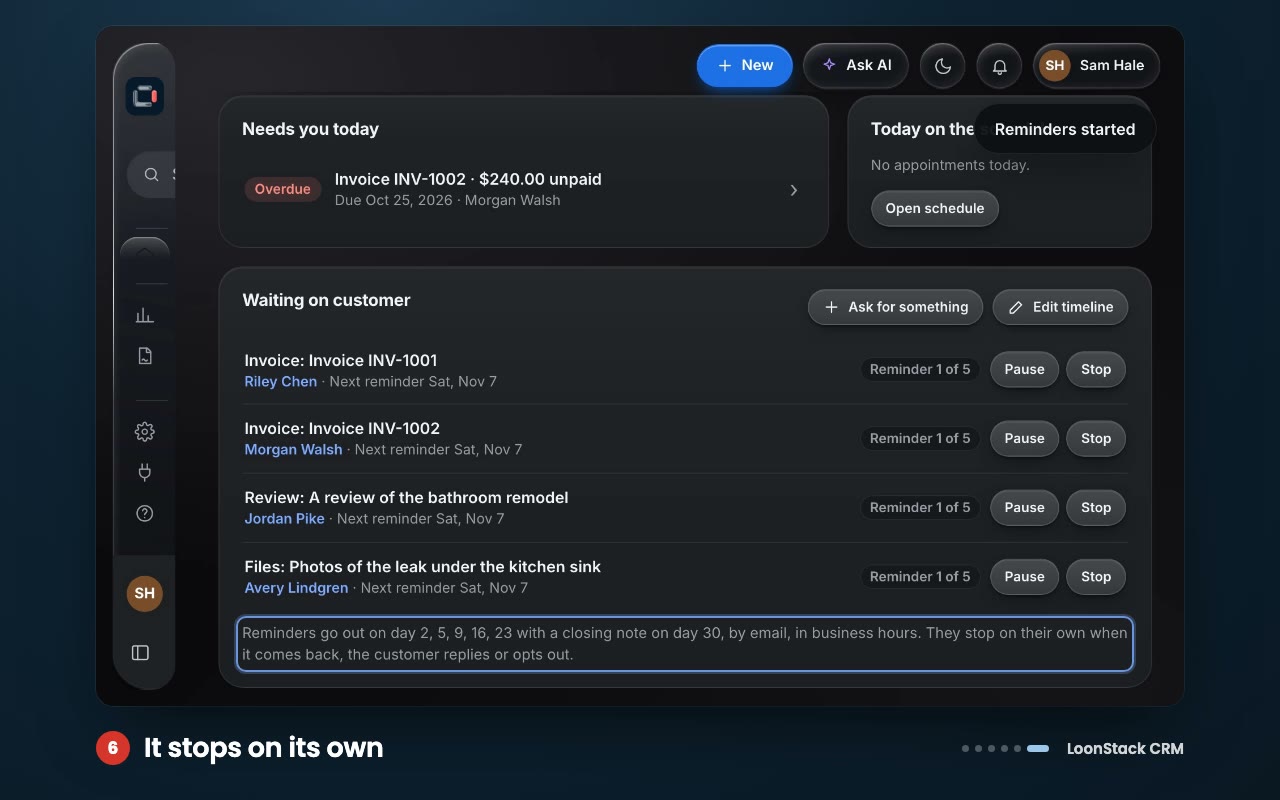 Follow-upsReminders until the scope or the check comes back.Watch it work
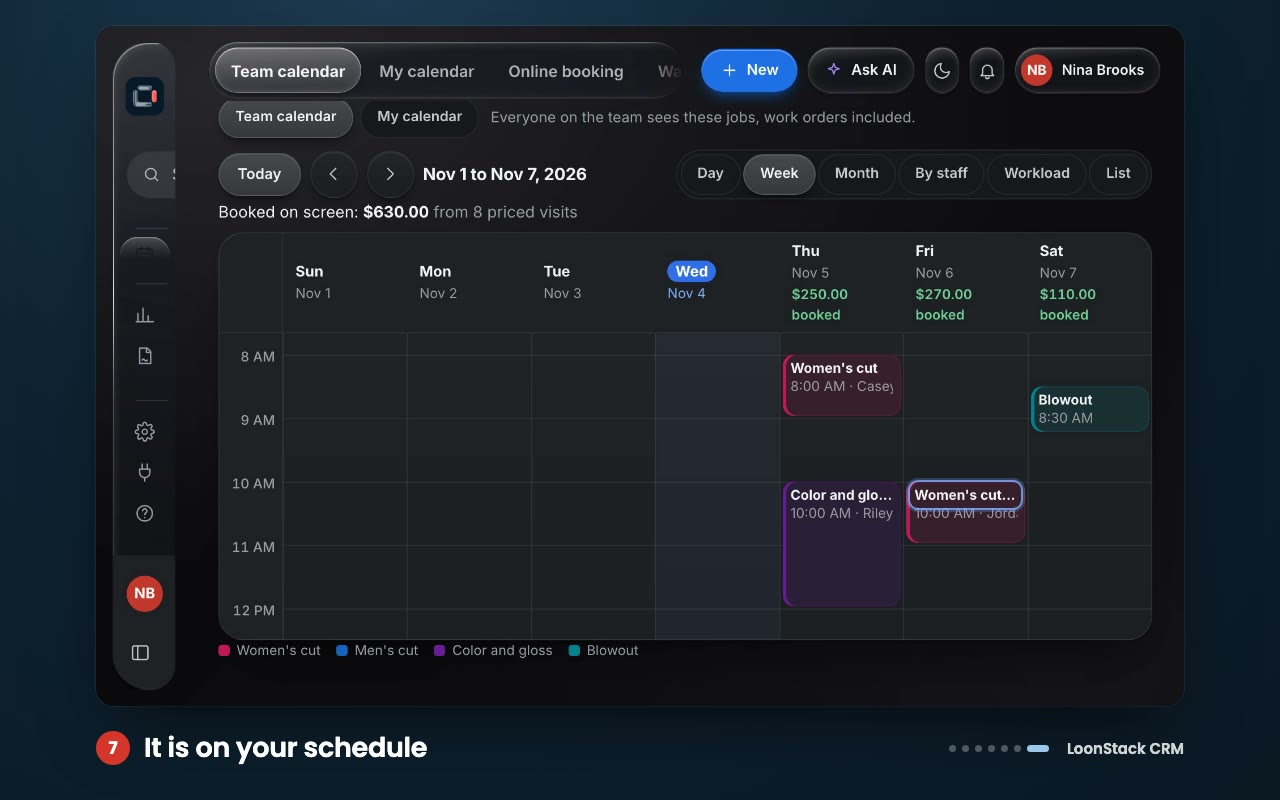 Scheduling and bookingInspections and adjuster meetings on the calendar.Watch it work
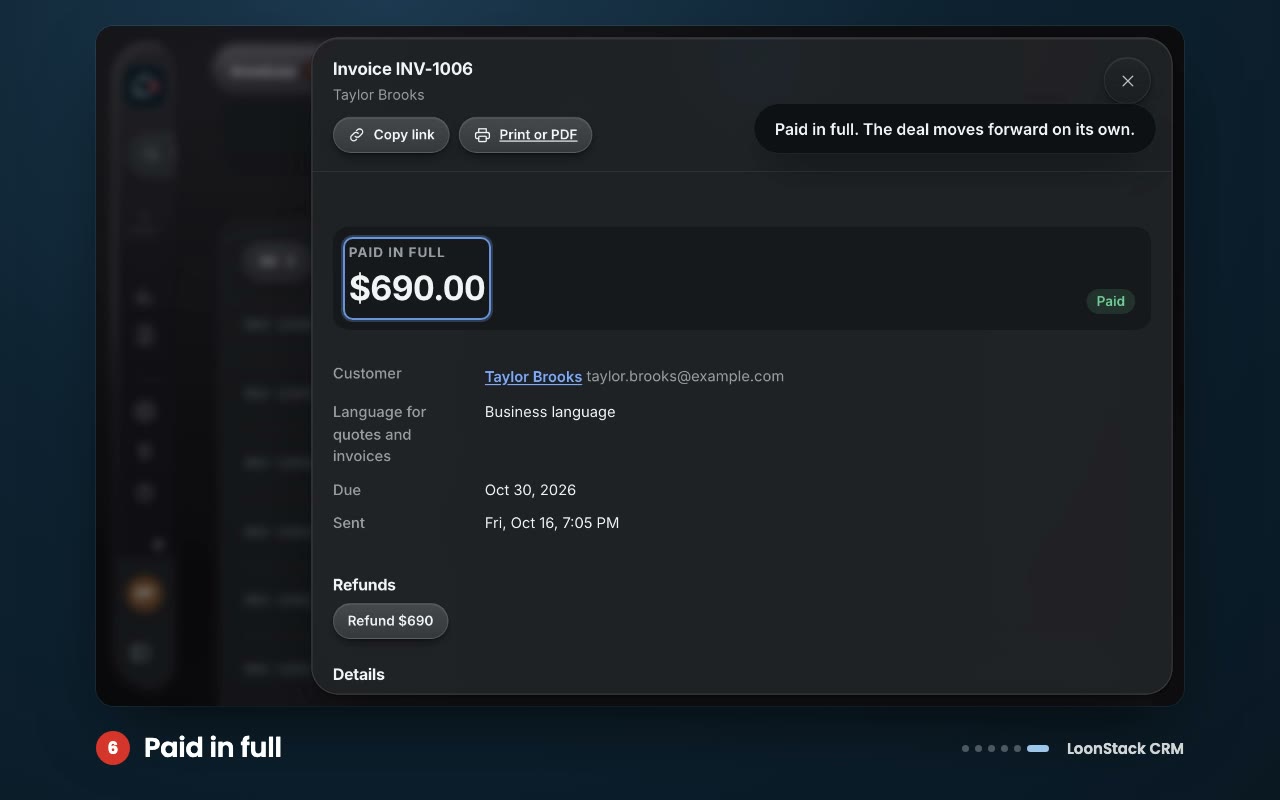 InvoicesDeposit, progress and depreciation invoices.Watch it work
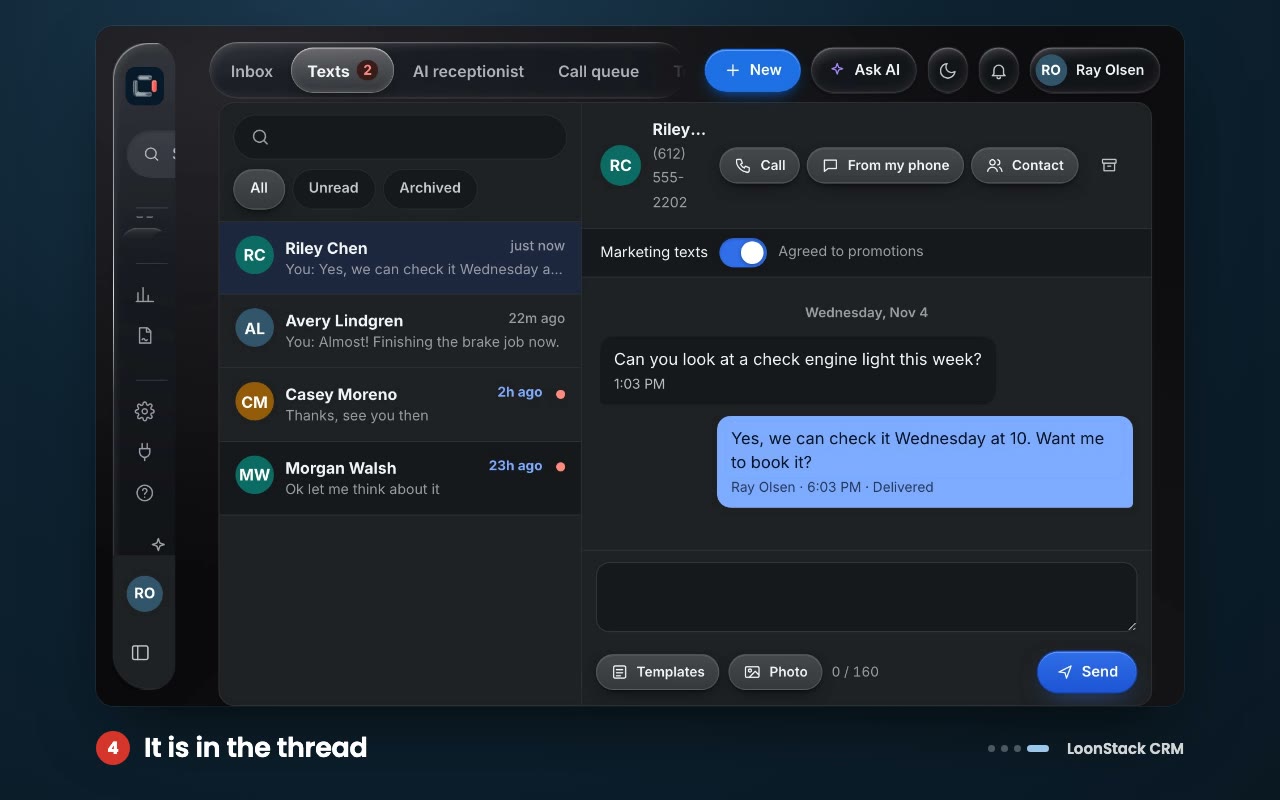 TextingUpdates to homeowners from your own number.Watch it work
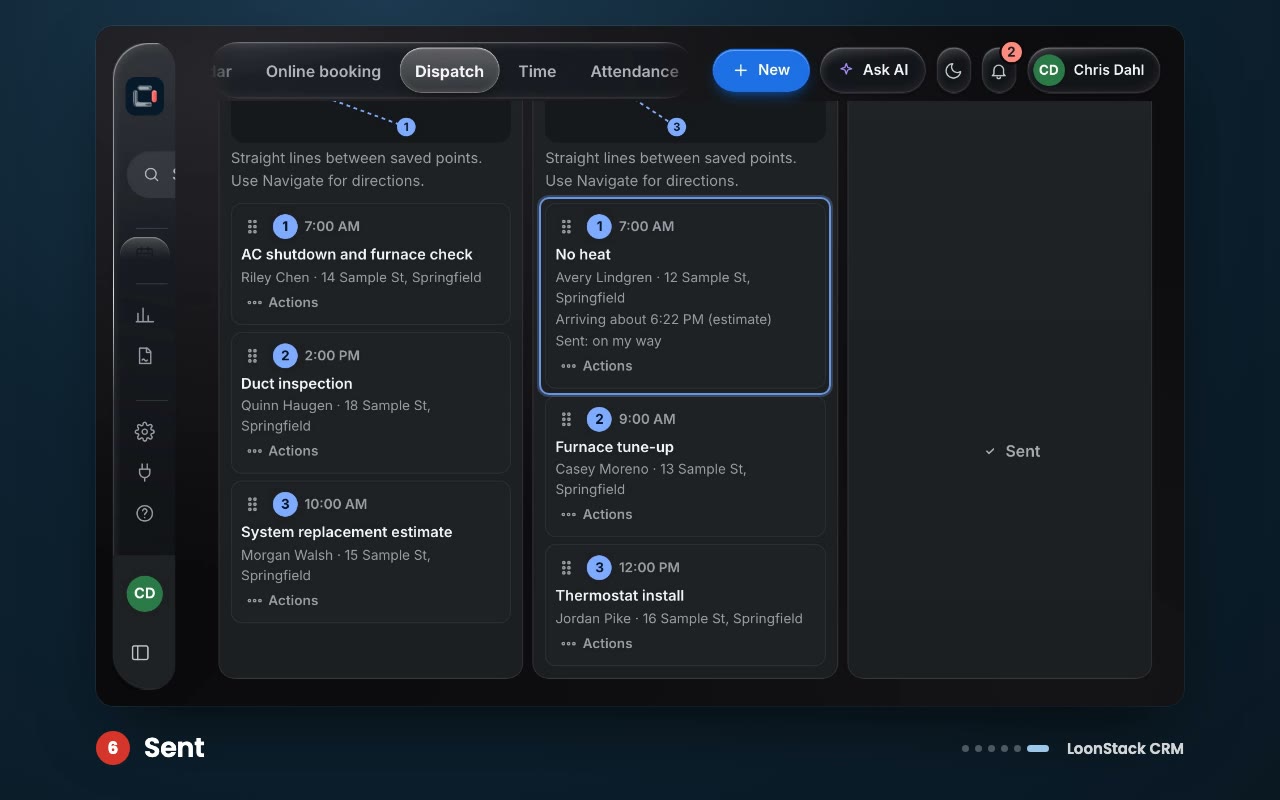 DispatchCrews in columns for the day.Watch it work
Built in for storm work.
Reports for the door, storm maps and roof measuring are part of the CRM, on every plan. The Ad Launcher is the one exception: it comes with SEO & Ads. Each card links to the steps.
Storm tools
- A follow-up desk for open quotesSee every open quote on a board (Sent, Following up, Negotiating) and a Today list of the ones that went quiet. Quotes that have an email address and have not expired get a drafted follow-up you can edit, send or snooze. Nothing goes out until you press Send.
- A live "your tech is on the way" pageWhen your tech taps On my way, the text to the customer carries a private link. The page shows the tech’s first name and photo, a map with the road route and an arrival time, and nothing else about your day. The position is shared only between On my way and Arrived, only the latest spot is kept, and the link ends a day after the job is done. After the visit the customer can rate it. It is on for businesses that go to the customer’s door, and you can turn it on or off in Settings.
- A free roof report for every dealMake a report from the roof drawing and the latest measurement. The homeowner page has the aerial photo, the roof in 3D and the pitch and area. The full version for your crew adds every roof line, a waste table, materials, ventilation and gutters. Both print or save as a PDF.
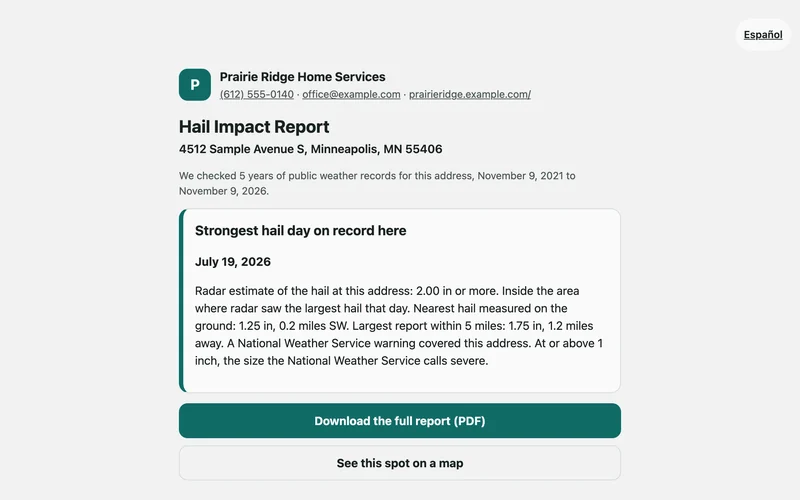 Hail Impact ReportsMake a report for the house you're standing at, with your logo, phone and license on it: hail size, distance from the storm core and the likely date of loss. It uses free NOAA and National Weather Service records, so there's no data subscription and no limit.
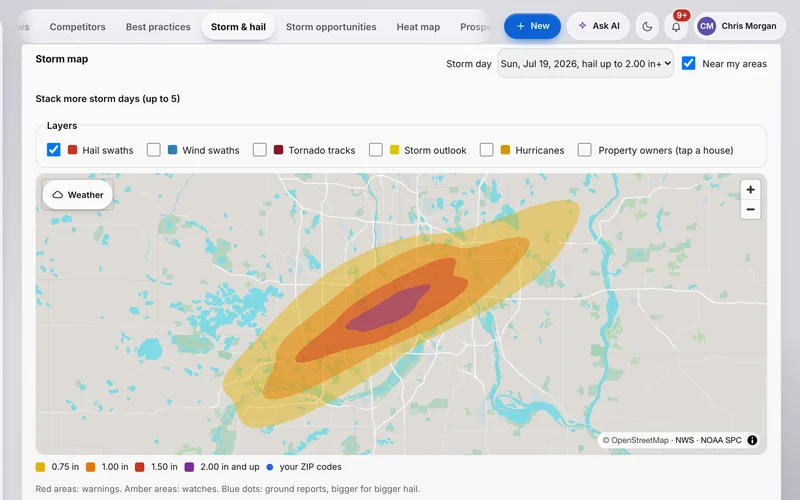 Storm layers on one mapHail swaths, wind swaths, tornado tracks, storm outlooks and hurricanes, each with its own switch. Stack up to 5 storm days and the areas hit more than once show darker.
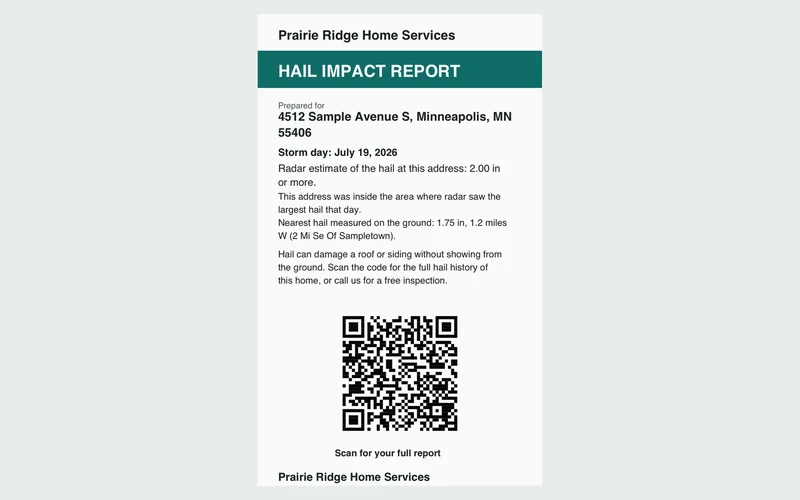 Door hangers with a QR codePick a hail day and a minimum hail size. You get one printable page per address, each with that home's hail and a QR code to its own report. Up to 500 addresses at a time.
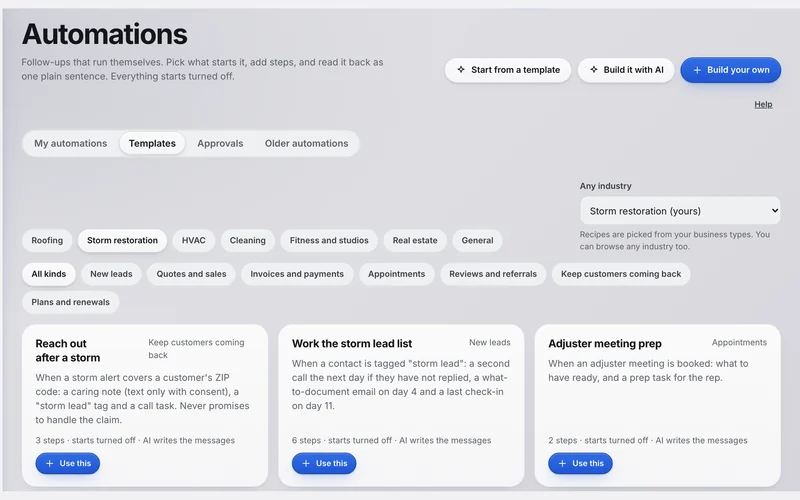 Follow-ups written for storm workReady-made automations like "Reach out after a storm", "Carrier scope received: check it" and "Depreciation released: close the file". Copy one, change the words, turn it on. They all start turned off.
Measure and price
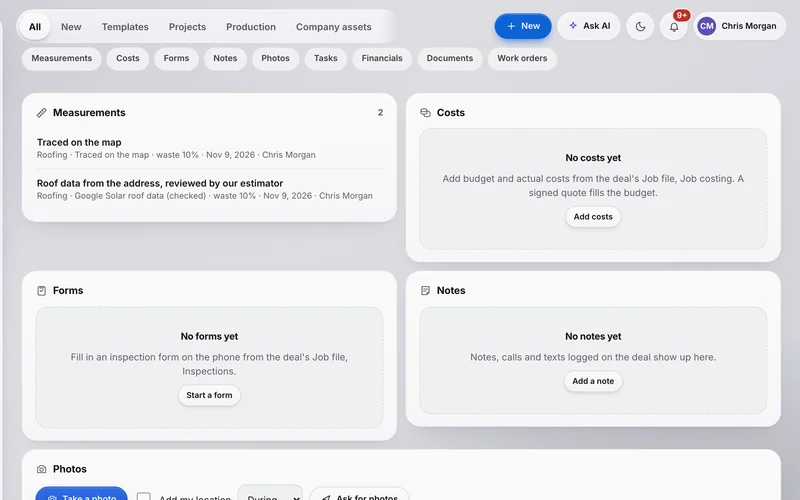 Measure the roof from the officeType the address and LoonStack fills in roof area, pitch and facets from Google's roof data, at no extra cost. Or trace the roof on a free aerial photo and it adds up the eaves, rakes, ridges, hips and valleys. Check the numbers before you order.
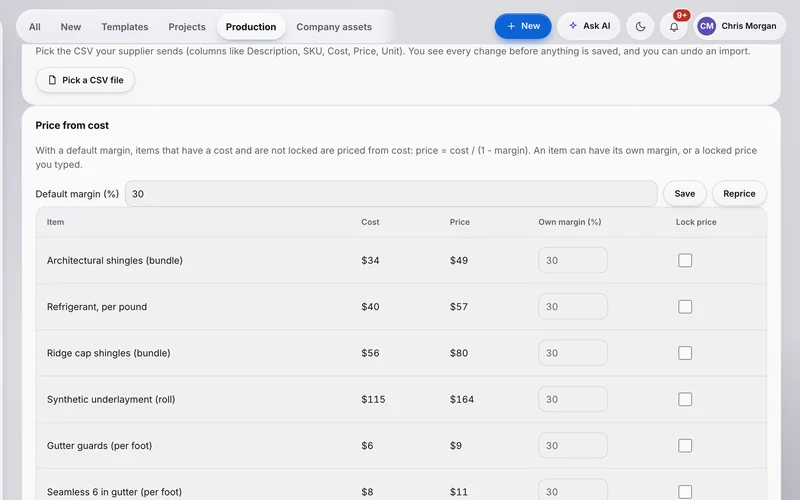 Your supplier's prices, your marginUpload your supplier's price list and see what changed before you apply it. Items get priced from cost at your margin. Type the total you want on a quote and LoonStack spreads the markup to hit it, never below cost.
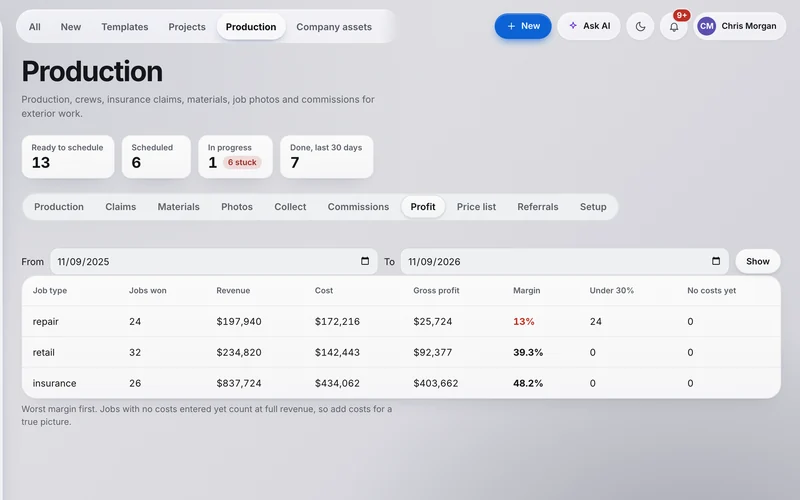 Profit by job typeWon jobs grouped by type, with revenue, cost, gross profit and margin. The worst ones are at the top, so you see which jobs aren't paying.
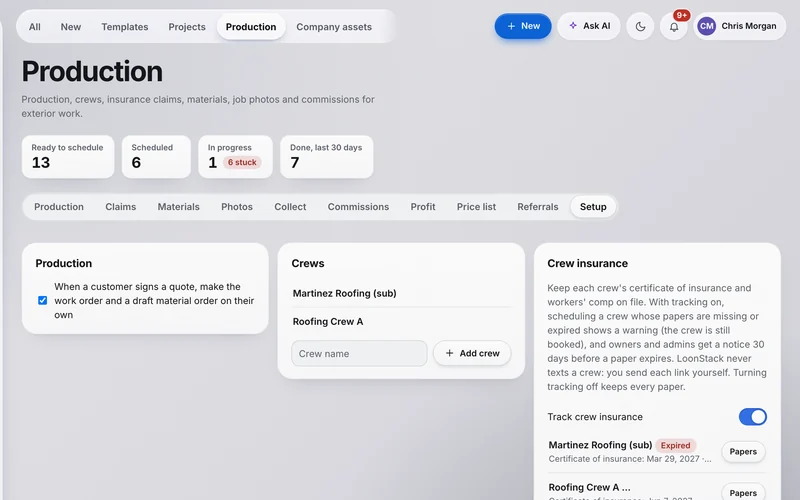 Crews with their papers in orderKeep each crew's insurance, workers' comp and license with the expiration dates. Book a crew with expired papers and you get a warning, and you hear about it 30 days before anything runs out.
More leads
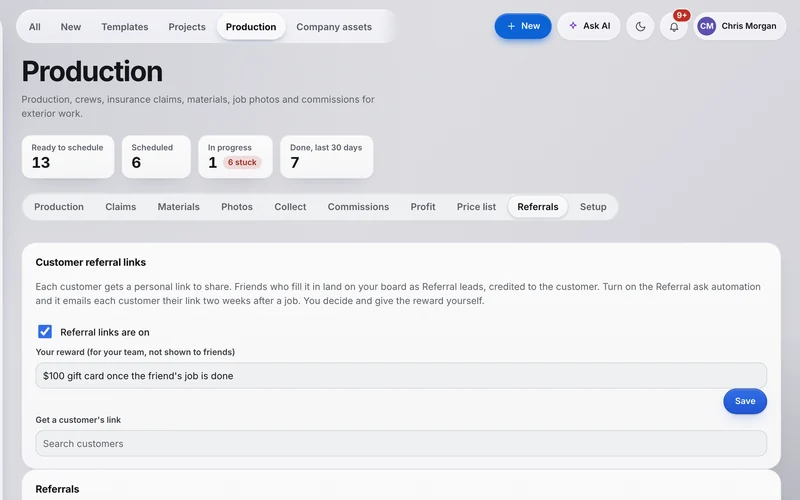 A referral link for every customerTurn it on and every customer gets their own link. When a friend fills it in, they land in your pipeline and you get a task to thank the customer who sent them.
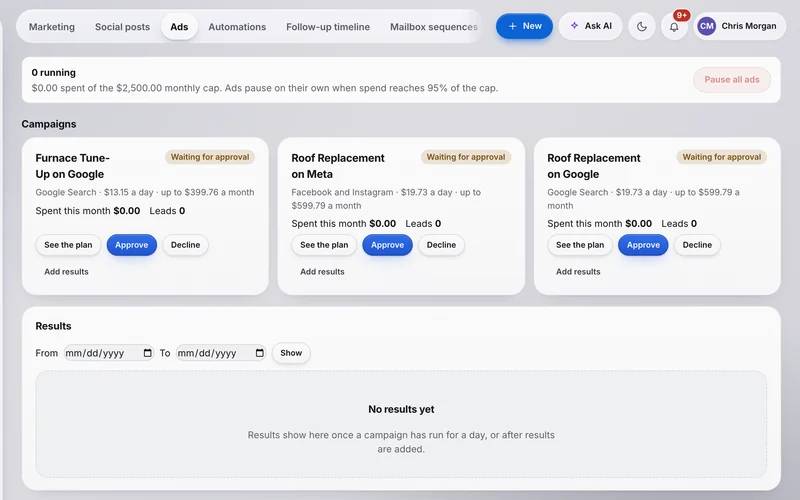 Ad LauncherWith SEO & AdsIf we run your Google or Facebook ads, you approve each campaign and its monthly max right in the CRM, then see spend, leads and won jobs. Pause all is always on the screen.
Project Radar
Leads from public permits and records.
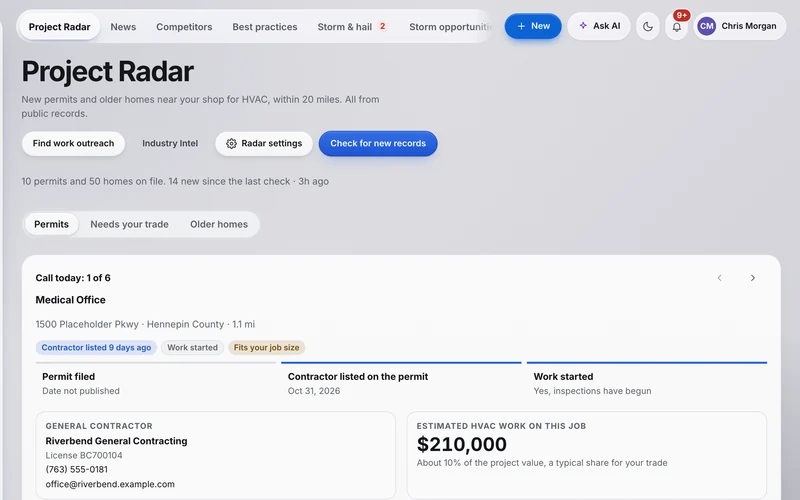 Permits: who to call todayNew building permits where a general contractor was just named, one at a time, with the contractor's license, phone and email and a rough estimate of your share, using the usual percent of the project value for your trade. Call, email, save it to the pipeline or skip it.
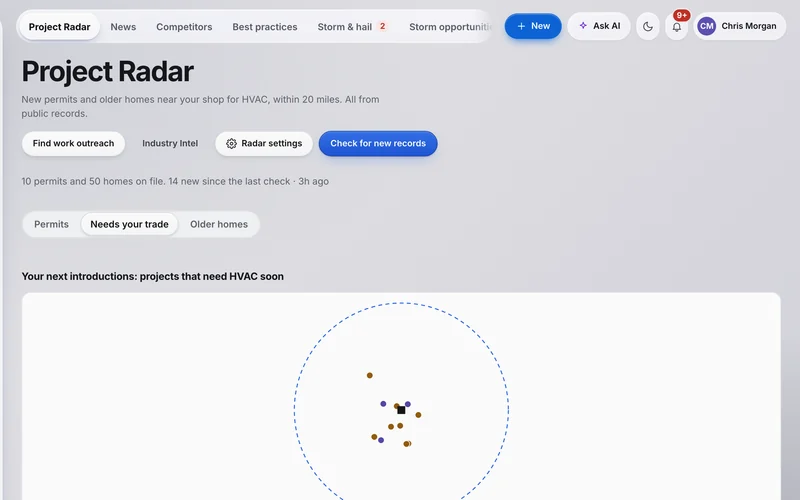 Needs your tradeProjects that have a contractor and no permit for your trade yet, scored for fit. LoonStack drafts an intro message, and you send it.
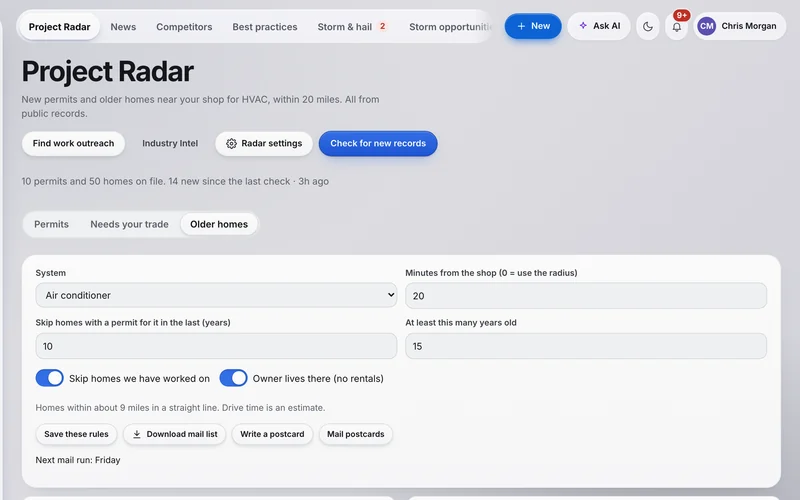 Older homesHomes whose roof, AC, furnace or water heater is past its usual life, on a map and by street. You get a mail list and a drafted postcard.
The free records cover Minneapolis, Chicago and Seattle permits and Minnesota parcel data. Anywhere else, you can import the city or county's CSV export. How Project Radar works
Pictures are from the real app with made-up sample businesses and addresses.
How LoonStack fits storm and insurance restoration.
Four things that cost storm and insurance restoration money or customers, and what fixes each one. Every feature is on every plan.
Quotes that match what they asked for
The problem. A homeowner asks for the repairs the adjuster approved, and the paperwork lags.
How we fix it. On the quote, list the repairs in the scope, line by line. Send it as one link, and the customer signs on their phone and pays a deposit if you ask for one.
What changes. The customer sees exactly what they agreed to, and you stop re-sending revised quotes.
E-signatures are built in
The problem. Work authorizations, direction-to-pay forms and change orders used to mean printing, scanning or paying for a separate e-signature tool.
How we fix it. Send them for signature inside LoonStack. A typed or drawn signature is saved with the time, and the signed copy never changes. You do not need DocuSign or a tool like it.
What changes. One less subscription, and every signed copy sits on the customer's record.
One platform instead of a stack of subscriptions
The problem. You pay for a claims tracker, a CRM, an e-signature tool and a texting app, and none of them know what the others know.
How we fix it. LoonStack covers customers, quotes, booking, texting, invoices, e-signatures and follow-ups in one app, from $69 a month with every feature on every plan.
What changes. One bill, one place to look, and the details stop disagreeing.
Missed calls go to the next company
The problem. You are on a roof after a storm when the phone rings, and the homeowner with damage calls the next restoration company.
How we fix it. Turn on the AI receptionist and a missed call gets a text back right away. Website chats and texts get an answer on the channels you choose, and every new contact lands in your pipeline with a next step.
What changes. The caller gets an answer, and the lead is still yours.
Switching from other software?
Today you can bring your contacts from a CSV, Excel or vCard file. You can import your full history too: customers, jobs, appointments, invoices and notes. See the export steps for your old software.
Business types on this page: Storm restoration, Restoration, Roofer.
Questions about the Storm restoration CRM
What does LoonStack set up for storm and insurance restoration?
Pick Storm restoration as your type of business when you sign up. LoonStack sets the pipeline stages (New lead, Contacted, Inspection scheduled, Inspected, Claim filed, Adjuster meeting, Scope received, Estimate sent, Supplement sent, Supplement approved, Signed, Materials ordered, In production, Final walkthrough, Depreciation released, Paid, Lost), the fields and the follow-ups for you. You can change any of it later.
Can I print door hangers for a hail day?
Yes. Pick a hail day and a minimum hail size, draw an area, or pick your contacts and canvass pins. LoonStack makes one page per address, up to 500, with that home's hail and a QR code to its report. A homeowner who asks for an inspection on the report page becomes a lead.
Which features do storm and insurance restoration use most?
Work orders and change orders: Change orders and supplements the homeowner signs. Follow-ups: Reminders until the scope or the check comes back. Scheduling and booking: Inspections and adjuster meetings on the calendar. Invoices: Deposit, progress and depreciation invoices. Every feature is on every plan.
Does LoonStack track the insurance claim steps?
Yes. Pick Storm restoration at sign-up and the pipeline has Claim filed, Adjuster meeting, Scope received, Supplement sent, Supplement approved and Depreciation released, plus the usual sales and production stages.
Can I keep retail roofing jobs separate from insurance jobs?
Yes. You can run a retail pipeline and an insurance pipeline side by side, each with its own stages.
Can I find homes and owners after a storm?
Storm opportunities lists your own customers and leads by hail day and by claim window (1, 2 or 3 years) closing soon. On the storm map, tapping a property in the 59 Minnesota counties with open parcel data shows the owner where the county publishes it, year built, assessed value and last sale, free. Other areas are not covered yet.
Can I send the homeowner a hail report?
Yes. Send hail report makes a link to the address's hail history PDF from NOAA radar data. Text or email it; the homeowner opens it without signing in, and you get a notice the first time they do.
How much does the Storm restoration CRM cost?
Solo is $69 a month for 1 user, Crew is $129 a month for up to 10 users and Company is $199 a month with no user limit. Paying yearly takes $10 off each month. Every feature is on every plan, there is no contract, and the first 30 days are free.
Can I bring my customers from my old software?
Today you can bring your contacts from a CSV, Excel or vCard file. You can import your full history too: customers, jobs, appointments, invoices and notes. Importing is free during the trial.
Other industries
Every business type gets every feature. See all industries.
Every feature, on every plan.
Every feature is on every plan. 30-day free trial: $0 today, card required, cancel in Billing before day 30 and you pay nothing. Prices may change with 30 days' notice.